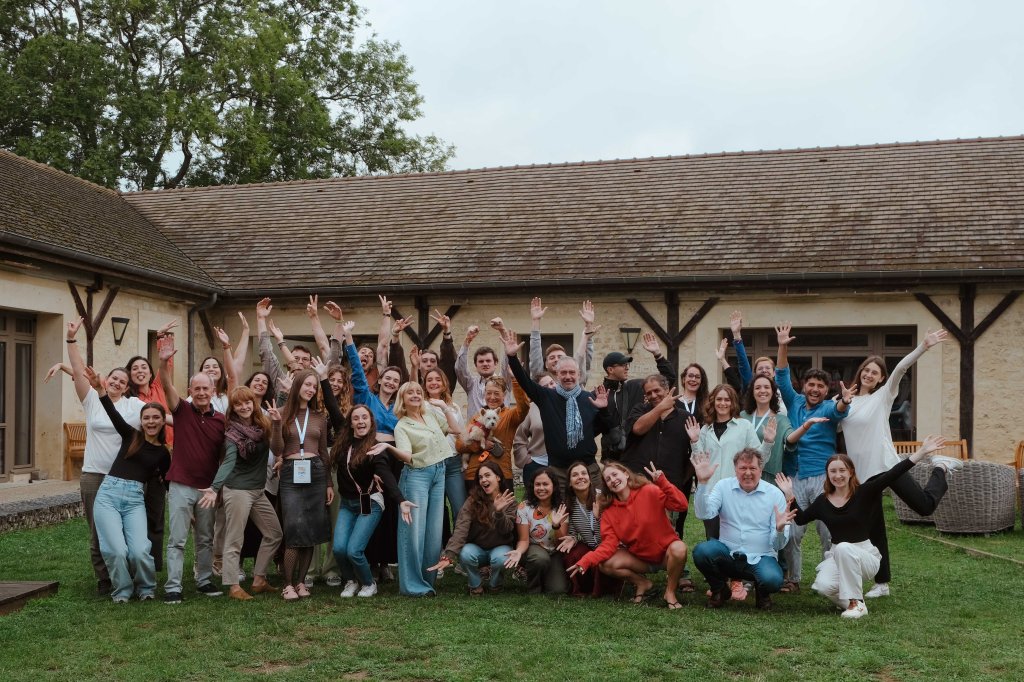
While doing contact and connection research for a study I am conducting I came across an organization and food systems platform that connects people working and studying in different disciplines along the food system and supply chain. Through the work on cases and participation in interactive of lectures, participants find a problem prevalent in the food system, and propose different ways of approaching it. On this lines I will make use reflecting journaling to disentangle my feelings, insights and reasoning process experienced during that week.
We started talking about the concept of food being treated as a commodity in most European legislation. This view disregards the cultural, nutritional and sovereignty behind the production, commercialization, preparation and consumption of foods. So we need a sift in the paradigm. Paradigms are a complication of concepts encompassing theories, methods, and standards that contribute to legitimately to a field. These are not necessarily the norm but are accepted by most people. When do we need a paradigm shift? When there is accumulation of anomalies.
Related to the concept of food not being a commodity, but rather a common good, there is a collective feeling that the latter consideration is dying out. Primarily the private interest is over the public one. We source food stuff from the environment for our own good and foods offer for example at education institutions are planned and sourced for the market interests, these are planned to be productive than nutritious and the eating moment is not seen as a learning space.
Currently most nations apply the rational choice, commonly known as the macroeconomic model, where the primordial goal is to maximize profit.
After these presentations we gather in our working groups, where we had the following reflections as our roles in the food systems: I research topics that can be later applied for the general public, I research how to promote fresh produce from a researcher point of view to later valorise it and apply it in the general population.
I am currently doing expert consultation and the response rate is quite low, this signposts several things, that experts are busy and we many times rely on the response from early careers, not saying that these people are not experts or have a saying in the topic but we would also like to have people that are role models, and active players in the current panorama.
Own reflection
Also as a deliverable of my project, we invited producers and other actors in the produce chain of fresh fruits and vegetables to coaching sessions where the central topic was how to use public policies in food to promote their produce, and the participation was also quite low. This experience also shows that the decision makers and people that have more impact on the supply of fresh produce are far from the producers and many times are middle men that are responsible for provision of foods to groceries outlets such as markets, supermarkets and other middle spaces. All this ranting about participation aside, I also try to continuously reflect on the role my views, culture and experiences play on the food systems and my way of acting upon that.
During another reflection exercise on the parts of our current system that are not helping in advancing towards more sustainable, equitable and nutritious food systems, I concluded that personally we are lazy, changing behaviour is difficult because it asks us to challenge the status quo and when looking at governments, this change is even more lengthy and sluggish. It is difficult to shift, there are many variables in play. Also clashes of interest exit, which is typically of any cultural change. In our smaller group, we came to the conclusion that we need a good narrative, something collective, as in the creation of culture (insert food note course I was tutoring and citation of resource), and that is food culture. We see that nations with strong food culture many times also have better policies around nutrition. That of course is not always the case when monetary resources and access to nutritious and fresh food are limited to the population. In this case, putting food at the centre of economic and political debate is key, by doing so we can talk and debate with those decision makers that treat food as a commodity while keeping the intrinsic quality of food as a common good.
To shift the paradigm and stop only considering money maximisation we need to stop only measuring success in monetary terms, but we should also seek efficiency along the supply chain, which also goes hand in hand with preventing food waste and valorising it and food side streams. Moreover, it should not only be the job of policy makers to propose food system’s initiatives, we should involve children more and then change the drivers.
During the last days of the Campus, we particularly debated around the key role public food procurement (PFP) plays in advancing to a healthy, sustainable, fair and prosperous food system which resulted in a declaration directed to policymakers. In our call for action, we ask to focus on the ingredients we source, people involved in PFP and the technology that can empower the much needed transition. You can find our declaration below!
 Belén Beltramo
Plaats een reactie